The Future of Work in Creative Industries: Insights from Creative Ladder
Game Plan
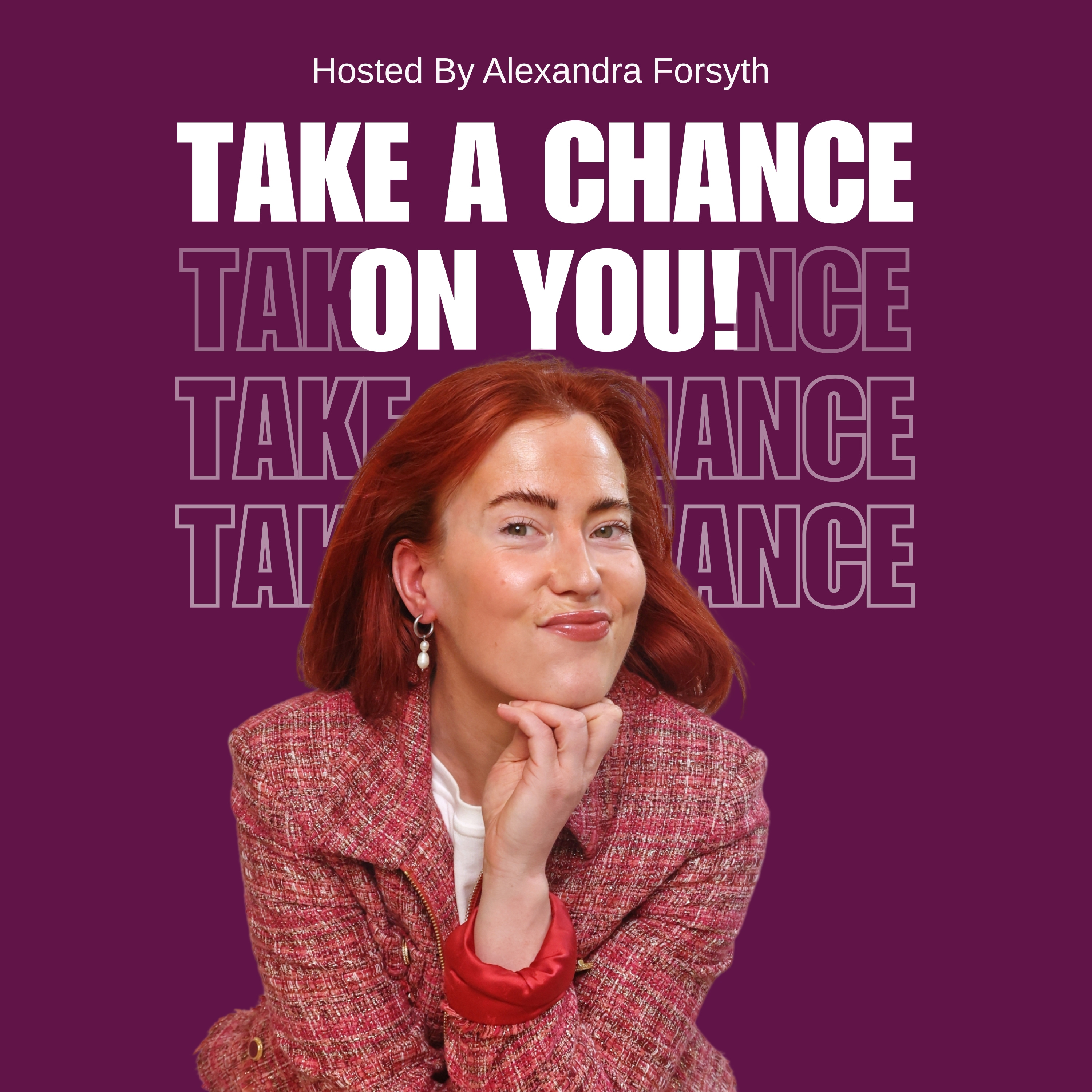
In the latest episode of Take A Chance On You, Alexandra sits down with Abnia Loriston from Creative Ladder to explore how creativity, leadership and human connection are evolving in an increasingly AI-driven world.
We head back to the U.S! This is exactly the kind of transatlantic conversation this platform was built for.
Creative Ladder, a nonprofit organisation dedicated to supporting leadership development for young advertising and marketing professionals.
They discuss the importance of access in the creative industry, the impact of AI on creativity, and the significance of portfolio careers. Abnia shares insights from the Bold event aimed at empowering women in creative fields and emphasises the growing importance of soft skills in a tech-driven world.
The conversation also touches on the journey of Abnia from education to her current role, highlighting the need for creativity beyond digital platforms.
She shares the significance of community and mentorship in fostering growth and leadership among aspiring creatives. The discussion also covers the future of work, the importance of understanding the behind-the-scenes efforts in creative projects, and the need for individuals to embrace their unique career paths as they navigate the complexities of the industry.
Takeaways
• Why access matters just as much as talent
• The rise of portfolio careers and cross-disciplinary work
• The growing importance of soft skills, empathy and emotional intelligence
• AI as an enabler for creativity, not a replacement for it
• Why community and mentorship are becoming essential infrastructure for future careers
• The reality that fear around AI often comes from the speed of change itself
Chapters
00:00 Introduction to Creative Ladder and Abnia Loriston
02:45 Navigating Creativity in the Age of AI
05:17 The Bold Event: Empowering Women in Creative Careers
08:23 The Importance of Portfolio Careers
10:55 The Role of Soft Skills in a Tech-Driven World
13:22 Tapping into Creativity Beyond the Digital Realm
16:11 The Journey of Abnia Loriston: From Education to Creativity
18:32 Bridging the Gap for Creative Growth
19:51 Navigating Rapid Change and Fear of AI
21:42 Embracing Adaptability in Uncertainty
23:32 Future of Work: Preparing Leaders for Change
25:44 Global Access to Creative Ladder Programs
27:09 The Importance of Community in Creative Industries
27:55 Career Pathways in Advertising and Marketing
30:01 Cross-Pollination of Ideas Across Industries
31:07 Understanding the Behind-the-Scenes Work
33:57 The Journey Over the Destination
36:03 Future Plans for Creative Ladder
Welcome back to the Take a Chance on the podcast hosted by
me, Alexandra Forsythe. I'm so excited today to be
passing the mic to Abnea Lauriston from Creative Ladder.
Abnea is the manager of the Rising Academy and Creative
Ladder is helping young creatives on their way aspiring
to vines above the ladder. Abnea, how are you doing?
Doing great today. It's a beautiful day here in my
city. I am enjoying the work that
we're doing today and getting ready for our next events and
conference that we're going to, which we were just talking about
Can Lions, yeah. Things are great.
So we've spoken a lot about all of the events that Creative
Ladder do and that you're getting involved in, but do you
want to give the listeners a little bit of an introduction to
who you are and what you get up to?
Yeah. So the Creative Ladder is a
nonprofit organisation that really supports leadership
development for advertising and marketing professionals.
And we're usually looking for folks in the 1st 10 to 15 years
of their career who have an ambition to be a leader, but
just need a path forward and understanding of what is
available and how to achieve it. And so we make clear that path.
We love to call ourselves an access organisation because we
know it's not a talent issue, it's an access issue.
And so we open up doors, we open up access, we make sure that
folks know what's available to them.
And for us, that can look like events that we have like our
events that we just recently we had in New York Bold and our
leadership Boot Camp. It can also look like taking
folks to conferences like when we go to Can Lions or Black Week
in New York or before we used to go to Brand Week.
So those kinds of events. And then we have our own
programming that we do. We have an intensive programming
called Rising Leaders Academy, which I'm the manager for.
And then we have a less intensive programme called
Future of Work, both of which are all virtual, but allows you
to really plug into the content and go deeper.
All of our events programming is meant to help leaders and rising
leaders, as we call them, see themselves in the community that
is present, but also in the content that is being shared.
We showcase how folks can become empathetic, creative, ambitious
leaders who are future forward as well as tech forward.
So we're super excited with the content that we've been able to
put out in the world, in the community that we've been able
to build. 7000 at this point, 7000, we're about to celebrate
our fourth year on July 1st it's.
Amazing. It's still really up and coming
what you're doing, but in terms of that tech forward and leading
with Embassy, it's huge right now.
And we've spoken about this before.
I feel like 2026, human touch, human connection, everybody's
talking about it In the age of AI, how are you navigating that
in terms of creative? Are you seeing any shifts?
Yeah, we definitely see a shift in how people are doing the
work. People are able to do work
slightly faster maybe, but it does take a lot more brain power
to, I think a human brain power to really decipher what AI is
trying to give you and to make sure that you're still creative
and your voice shows up. I think that's where a lot of
creatives have been struggling from my point of view is trying
to find what is that voice that they know they have and that
they want to showcase, maybe while using AI, but even taking
it further with like how they showcase their own brand.
And so I think that storytelling, that understanding
of your POV and your your niche and the thing that you do really
well is even more important now in the age of AI than it was
before. And that's where creativity is
trying to hone in on what is the creative thing that I bring
rather than what is the work that AI can help me do faster.
I was reading an article this morning that was saying use AI
for prompts and automation where you can.
But in terms of creativity, obviously that storytelling,
that's what makes the industry so inviting, longevity, long
lasting in terms of career. So if we use AI to be creative,
it's a juxtaposition regarding the industry.
Yeah. And I think it does take time
for the industry, the people, the tactile, all kind of get to
a place where they're sitting well and working well and and
playing well. So I know that the shift is
going to take time. And there is definitely a
spectrum of where people are right now from, you know, early
adopters who are already on the way to building the biggest next
thing. And I know like the big thing is
like, can a one person company exists where they make a billion
dollars, right? Like everyone's seeking that for
me in the creative space. I think can we all work together
and still create beautiful work and to create moving content and
create things that really help people see themselves in a brand
or see themselves in a product and watch go out and buy it.
But also made that faster because of AI or made that
easier for us to make that possible or make the vision come
to life because of AI. That beauty that comes from the
human brain and the human creativity.
I know, or I hope at least, that this work won't lose it because
so how many humans involved in this want to do that?
They want to be creative. They want to see creative come
through with AI, not be crushed by.
AII embrace AI for automation in terms of tasking, outreach,
drafting up responses perhaps, but I would always do my due
diligence in the end. I would always take that step
back to do check. So I think if we can get to that
place, embrace it for what it is, but always remember that
humanness that comes with this interactions, and I guess that
the live experience and the community that you're building,
that is really what solidifies the human side. 100% and even in
the work that we do, we may like with our programmes, we may tell
people, you know, use AI to do this reflective work or use AI
to do this assignment that we are asking you to do, like a
financial profile on a business or whatever that may be.
But at the end of the day, you have to take that information,
perceive it through your own lens and your own point of view
and give a story that is specific to your leadership.
I think that's where the beauty of AI can meet creativity and
make even more beautiful thing. Where we are right now is still
in the infancy of that and we're still navigating what that looks
like. So I will say we're years away
from AI even making a video on its own.
Maybe not as many as I think, but I also know in that process,
there will be humans who are behind it, helping it and making
sure that it's doing it right. The AI that will make the swap,
for the lack of better word, that we continue to see will
always exist. Tech always has those moments
where we have greatness being made with it, and then we have
things that we wouldn't want ourselves to be watching or to
be distributing over and over and again, and we'll eventually
start to sift those out of our work.
Hopefully it reminds me of the AI actress.
Will she win awards next year? And that creates a lot of
controversy because you think it's not a person, it's
digitally created. I do agree with that to a
certain extent because it takes away what the award show stand
for and why we have that level of prestige.
So it's interesting. And it will take time to.
I do think that one day we may give an AI artist like who
created a Tilly or a a model or an AI actress the award.
Yeah for yeah for creating and being able to do that.
But an AI itself accepting an award I don't.
See that? So it's it's crazy anyway,
there's too much, there's too much going on in the industry or
something. When you said it's years away, I
thought to myself, Silicon Valley, it's scary.
So yeah, feet on the ground. Talk to me a little bit more
about the bold event. We've spoken about strategy and
creativity, and I think this is a really strong point to bring
out. It no longer feels it's about
content creation or possibly only about storytelling, but
actually having that strategy mindset when you think about,
again, longevity in your career, IP autonomy where you see
yourself. Yeah.
So our bold event is an event that we hold every March during
Women's History Month, and the goal is to truly empower women
in the content. But it's really to create a
space where we can have bold ideas, really think about our
careers boldly, really think about good industry boldly, and
create a space of belonging, ownership, leadership and
determination. And this past one in New York,
the goal was really looking at your career and thinking about
it with autonomy, as well as understanding that yes, the the
winds are shifting, but you can hold on and actually gain more
possibility during this time, not lose as much.
And so how do you meet these moments of pivots or assume
moments of change to truly pivot your career, to truly think
about your career strategically? Should I go into more content
creation? How should I showcase my work?
How should I think of my work? Should I think of my career as
one brand or one agency for the next 10-15 years?
Or should I be working with multiple brands all at once and
thinking of myself as the business and selling my
abilities? So portfolio careers have been
something that come up multiple times during the bold events we
put on to showcase like here's the future of where you can be.
We don't want you to see the changes and get lost and felt
forgotten. We want you to see this change
and feel empowered and emboldened and equipped to meet
it and not feel left behind. You said so many amazing things
and I say that with every guest. So that's just like, that's my
tagline, but I really love portfolio careers.
I talk about it so often as well.
I think the ability to be multifaceted and really tap into
your skill set and say for me, for example, on really corporate
background, heavy consultancy, but I'm such a storyteller
through public speaking, hence the podcast.
The ability to be able to merge that together in a tangible way.
People want more, not just brands, but businesses and then
ourselves as individuals. We want more ROI in life as you
say, I feel 1 industry, one career, 1 brand.
Will that really satisfy? And it's all about that
fulfilment. Yeah, exactly.
That's fulfilment in your career, that fulfilment in the
work that you put out your in your skill set that you're
building too. Because I think as time changes
and as tech changes, sometimes where you are could be what's
limiting you. Right now.
A lot of brands are saying they're AI forward, but because
of IP, you're because of issues with their contracts, they can't
really open everything up to AI. But if you are the business and
you're the person who is doing your work and sharing your work
and you're more on a contractual basis having a portfolio career,
you can use AI, you can open yourself up to new things that
you haven't been able to do before.
And there's a balance to, I think like you can do some days
of nine to five with someone and then sometime after that nine to
five, you have a 5 to 9 that you're doing of doing some
additional work, contractual work, putting out your content,
whatever it may be. So I think that's the other
thing that people are trying to navigate is where can I take
back my time? AI to a certain extent, I got
market research. What you said about putting
together a report or a portfolio of a business, you can do that
through an AI and I do sometimes because it aggregates the data
online builds that report a lot faster than it would possibly
take me one to two days to do that by myself.
I could possibly take half a day and then it frees up that time,
as you say, to put that content out.
Schedule your post and then go on to that contractual
freelancer projects, perhaps with a few different companies.
It is all about getting that time back because you want to do
more, You want more experience and exposure. 100% And that in
marketing and advertising, I think is the new way of being
creative is exposure is being in a lot of different brands or
agencies and seeing how they work and learning from them to
bring to other places. One of our amazing partners,
Dictative Ladder shared Consigliary shared that the
future CMO has to be an architect almost and how they're
building communities for these brands.
It's not just putting out an advert, It's not just putting
out, you know, things on social. It's not just one thing.
It's how do I make all of this work together to create moments,
to create events, to create a craze, A viral moment, whatever
it may be, but to keep the community building and and also
nurture as it's building for this brand, around this brand.
So I think that is that is somewhere that creativity is
going that I haven't heard a lot of people talk about as much.
It's so interesting. There's a podcast that I was
listening to recently. I think it's the CMO podcast and
one of these speakers works at TikTok and she was saying
something very similar to what you just said.
It's about touch points. It's about that storytelling,
CMOS as individuals. It's not just about the market
and getting by and then getting budget, getting the funding to
actually run the campaigns. What's beneath that?
And that comes down to you as a pulse.
And then again, going right back to the beginning end of the
emotion intelligence, if you have that or you can work on
that as part of your professional development, it
will enhance the campaigns, it will enhance, obviously bridging
that gap with the community. 100 percent, 100%.
So interesting those. Soft skills.
Those soft skills are funny enough, and I heard another
speaker say this, Chingy David Ching, say that the soft skills
will become even more important during this time of AI,
ironically, because so much of the hard skills can be done by a
machine now. So like the market research that
you just brought up can be done by an AI, but the soft skill of
like intuition and knowing that this research means this and
that, in addition to that, you've seen something with your
family or with your friends and you've seen something else in
another space that isn't related to marketing and advertising,
but can affect our marketing and advertising.
That's the intuition that is going to be needed by the next
group of creatives too. It's also pattern recognition
and data analysis, and it reminds me you would only know
that had you gained the experience.
So I wonder, what would we say really to aspiring leaders on
their way if they aren't familiar with that process?
Yeah, I definitely would say get familiar with it in any way.
And one of the things that you can do at the Creative Ladder
has a quiz on our website that kind of tells you what kind of
creative you are. I am definitely the productive
kind of creative who loves to create things but make them
tangible. I know of some of my colleagues
are visionary creatives who like to really think of the big
picture and bring it to that, bring it to people to bring to
life. So everyone has their own
creativity and The Creative Ladder wants you to tap into
that. I think for for the folks who
are in the work or finding other spaces, as we mentioned, to do
the thing you're passionate about.
And then for the folks who are in school still or who are still
tapping into their creativity, finding spaces that aren't as
prescribed for creativity that you can bring creativity to.
I think like everybody I've I've spoken to recently has talked
about how they're tapping into tangible hobbies from knitting
to sports to just getting out and doing things with their
hands. I think that's another space
where while AI can get you to do a lot of the brain work that you
have to do quickly, the hard skill of your brain quickly, the
hard skills of your hands, AI still can't do that either.
And that's a space where creativity can flow a lot
quicker to you when you are using your hands and being
creative with your hands. I think for me, the more I use
AI, the more I create conversation, so I often find
myself wanting to really talk to people and not that I don't
already say hello, but I find myself really wanting to say hi.
How are you doing? Because otherwise you're sat
with AI and it's it's very discombobulating.
Yeah. Really interesting and obviously
a soft skill is conversation communication.
So many of our soft skills are going to be even more important,
I think, in this in this age. Definitely.
And also, I took the quiz and I can't remember, I can't remember
exactly what my outcome was, but I think it did say creative
director and it's that storytelling.
Oh, I love that. I love that.
And that is very aligned. With you, yeah.
And I talked to myself and obviously I do a lot of speaking
anyway, so the storytelling comes through.
I wanted to ask you more on the creative side, thinking about
your background because creative hasn't always come naturally.
You have a teaching background before working at Creative
Ladder. Do you want to give some
insights into that? Yeah, I definitely believe there
are two types of creative. So there's the creative noun and
the creative adjective, Adverb descriptor.
More I'm more of the creative descriptor of not the noun
version. I did start my career in
education when I started in as a high school public school
teacher. They did it through Teach for
America. And so really trying to focus on
how do I bridge the gap for my students in a creative way
quickly because because they were so much further behind.
Same thing for when I was working with teachers and
helping them support inner city students, really trying to
bridge the gap for them of like what their students need and
what they can provide as quickly as possible.
And the same for what I'm doing here at the creative ladder.
Everything that I try to do, I try to figure out with as much
creativity as possible, how to bridge the gap from where people
want to be, which is they want to be leaders, they want teams,
they want people to see them as leaders and where they are now,
which is these very capable, amazing, creative individuals
who have so much to share, but just don't see people like them
as much or don't have the kind of sponsorship or mentorship
that they need and the community that they need.
So a lot of my work has always been in this way of bridging the
gap and helping people grow. And funny enough, I'm able to do
it in a lot of different spaces, which I love.
I didn't think I would be able to when I first became a
teacher. And every time I've pivoted and
reformed my career to a new industry, I still am able to do
the same thing as I was as a teacher.
Yeah. What do you think's changed in
terms of teaching through to created now?
Do you see any big differences in terms of pain points for
young? People, yeah, I see the pain
point of things changing really, really fast.
I think in a space where our brain usually takes knee jerky
reactions, implicit bias, as we used to call it and talked about
it, that biases that our brains have when they have to think
quickly, when things are changing so quickly.
I can see that coming up because so many people are relying on.
The the more intrinsic version of their brain to think through
these things. And so the fear for AII would
say comes from that of like this change happened so quickly.
I haven't even had time to kind of hold on to what AI is and
it's already shifted and it's constantly shifting.
That fear comes from a biases that our brain is like changes
too much, too much change. Let's stop.
So I can see that happening. I'm in a lot of the people that
we support and even over time with the people that I work with
who are colleagues, that the the degree at which change is
happening can be alarmingly disorienting and can be hard to
navigate. To the point where now you rely
on old habits to get you through when truly it is new habit that
are going to support you and reconfiguring and bringing new
skills together for a new way of working that will get you
through. And I don't see a lot of people
fully tapping into that part yet.
I think it's just a mixture of uncertainty and then as you say,
everything is changing so fast. We're all trying to get used to
this new normal in a way with AI and technology.
But not even just AI mean autonomous vehicles, Pontown.
There's just so much going on and adaptability is key, but
also we're all trying to tap in and see what is that way forward
that will be beneficial to process.
But I think one of the things that we have to remind ourselves
is there was, there was never a way that was correct before and
there never will be a fully correct way forward now.
And I think that is the adaptability that a lot of us
have not tapped into, which is it's OK to mess up.
It's OK that we won't have the answer.
It's OK that it'll be a little messy.
We'll be, we'll get uncomfortable and dirty, but
we'll keep moving forward. I see a lot of folks kind of
pushing back and digging their heels into the mud or creating
big pieces of themselves so that they can move slower rather than
being more nimble and fast and being more adaptable in the
changes that are happening. It's almost like having a safe
to fail mentality within the organisation.
We also within ourselves as individuals.
I spoke recently about limiting beliefs and my own patterns of
that and having to break those in terms of like you say, it's
OK to mess up, it's OK to not have everything today but try
and try again and wake up and go for it second, third time and
then eventually you will get the outcome you desire.
So it's internal within ourselves, but then also
external within our environment, team, organisation, cultures.
When so it's a combination. 100 percent, 100% fear.
It's the thing that we, I think a lot of us need to let go right
now of the change, of the uncertainty of the am I going to
have the right answer and just take a chance on yourself?
Take a chance. Take a chance on you, yes?
Yes, yes. Very nice, very nice to us.
Talk to me a little bit more about the future of work.
And so Steve, this is a fantastic programme.
You have your bold events, you've got cans coming up, but
you have this future of work as well as the Rising Leaders
Academy. Yes, these are our more
intensive programmes that I'm. As I mentioned, future of work
is all virtual. You meet twice a month to hear
from amazing speakers on our four pillars of agility, AI,
ambition and advancement. And the goal of this is really
to help our future leaders and our rising leaders see how the
industry is changing and what they need to tap into.
So around agility and what we just talked about is around
adaptability and being able to meet the changes and not be
taken aback or feel like you have to be afraid of them.
Around advancement. What is going to truly bring
your career forward in the future?
AI we've been talking about that all day.
We, there is no stopping us with this.
It's, it's here, it's going to be here.
So how do you use it to the best of your advantage and use it
ethically as well? That's a part of that
conversation. We've had great speakers and
every time we've had a speaker, I've walked away with so many
gems. And the same for our attendees
of just like, wow, wow. So much that we can absorb now
and take. I shared a few of them here with
you already with the audience. So future work is really one of
our programmes that for us, it helps keep that bridge of you
just went through an event. We gave you some great content.
You want to keep going with that content and you want to keep
learning. So here's some additional
content and information with Rising Leaders Academy that
takes you even deeper where we're like now here's some
assignment, and here are some ways that you can start really
planning out how you want your leadership to develop.
It's six months long and we're meeting again and folks are
really working on their own after the sessions.
It's a lot more deep work. Every time people go through
that programme, they're like, wow, that is a lot of work.
But it was worth it. And I will never forget the
things that I've learned here. Yeah.
Amazing. In terms of the process of
aspiring leaders and leaders in their way getting involved in
creative ladder, what does that look like?
I'm just thinking since it's specific to US based leaders, am
I right? If anybody say across the UK
wanted to attend virtual, could they?
So anything we're doing virtually, you can attend.
Anything that is being done in person, we would want you to be
close by to attend Future of Work.
We had participants from organisations join after their
organisation said that they wanted this for them.
For Rising leaders, we have an application that is for mostly
US based folks because of the times that we meet.
But then for our virtual events like self leadership and
well-being or sometimes we have virtual events on topics that
are going on in marketing and advertising.
We will have those open for our global audience, which we do
have quite a few people outside of the US as well.
It's such valuable information and there's so many resources
there and as you say, the opportunity to possibly connect
with wider community in the speakers as well.
Yes, exactly. And that's what we are all
about. Our our community at the end of
the day is our bread and butter. The people who come to our
events, who come together, when they do meet each other, they
just feel seen, They feel uplifted by the people there.
It's only you did I think the young traders going back to that
uncertainty community is the most important part.
I remember we spoke about before, not a solo journey, it
really is cross collaboration, especially in our industry.
You've got to be talking, you've got to be sharing your ideas,
you've got to be building your portfolio, but through.
Exposure 100%. We say rising tides lift all
boats and we say, you know, reach back and help someone up
the creative ladder because we know that when you find and
especially when you're building great communities, when you find
great people, you want to make sure that they find those great
people to. The creative ladder grew as big
as it did because of word of mouth, because people would
attend or join us and see how fulfilling it it was, how
amazing it was for them and how impactful it was for them and
wanted the same for someone else.
So 100% all of that. Which type of career do your
leaders tend to go into? You mention marketing and
advertising quite frequently, Creative, obviously, there's so
many roles, so many responsibilities.
Could you give a little bit of an insight into that?
Yes. So for us, we do mostly work
with folks who are in advertising and marketing from
either the account side, production side, design,
copywriting, whatever it may be, paid media.
Our goal is eventually to go into other creative spaces.
We do have a sister organisation group Effort Initiative that
does the film side. Amazing.
They are. Yes, they are there too, but for
us, we we are mostly only in the advertising and marketing space.
Knowing that creativity can be both the noun in this space as
well as the adjective, the descriptor in this space too,
because so much of the work is corporate, but it's in a
creative way. This is the ones department in
the corporate space that can do things creatively.
I can say the industry itself can be so broad, but I think
that's more inviting because there's opportunity if you
wanted to start a marketing and advertise in copyright and then
pivot to production and then possibly pivot to another side
of the industry opportunities and as I feel more fluid than
other industries perhaps. 100% yes.
You hit it right on the nail. The fluidity that you get in
advertising and marketing also allows you to start to see other
spaces too that you can bring your creativity that isn't even
in marketing and advertising. And I think that's also the
beauty of it as a lot of folks start to realise there is sports
specifically that I want to focus on and I want to go deeper
in that. Or there is skin care that I
care really deeply about in the work that I've done in marketing
and advertising and I want to learn more about it.
So they start to go down that rabbit hole of understanding
what skin care is and creating their own brand.
So it is interesting to see how so many people in advertising
and marketing have used it to bridge other industries and
other other aspects of their life to.
Cross medium, it's really a tipping point this year.
I've spoken to show many people, entertainment, gaming, sports
industries are just merging more and more because there's such
value in that crops collaboration.
And we've said it just then, yes.
It's it's no longer helpful to just be by yourself and try to
your industry by yourself. No, we have to cross pollinate.
We have to figure out how to get a little bit from everyone.
I think that's really exciting. Build campaigns, especially in
marketing and advertising, that actually do tell that story and
go the extra mile. Oh yeah.
I think that's where the creative work comes from, right?
Because it's able to see and get sparked from an idea in this
industry or in this type of work and use it and re reconfigure it
for the work that you're doing or the industry that you're in.
I think that's where creative creativity truly lives, is in
the reimagining. That's so much that goes on
behind the scenes. We don't talk about that enough.
Obviously we see the campaigns and you think it's it looks
fantastic. That's why we put it together
because again, it's touch points, it's moments, it's
story, but so much has gone into that from multiple different
teams, individuals over a long period of time.
So I actually find elevating that and.
Yes, we did some work on that too at the Creative Ladder.
Inside the Creative's Mind was one of our programmes that we
had for a little bit to showcase how creatives think.
And then we had on LinkedIn some LinkedIn lies that we were doing
and probably are still on our LinkedIn page on what is the
work of certain creatives and to really dive into the work we
were doing for the quiz as well. So IA 100% agree, like a lot of
the back end work can sometimes be unseen and all you see is the
Super Bowl ad and the people in that or you know, the yes, we
love that or yes, no talking about about that at all.
But that's thousands of people, not just the people on that ad.
And I also think like for a lot of young people, they, they
don't understand a lot of what's happening in the back end.
And so they don't think it's possible.
They don't think it's even tangible.
And I think giving some sense of what's behind the curtain allows
people to see themselves in that work too.
You think about the poker as a prime example.
I've gone through the whole life cycle, putting the title
together, the concept, getting the guests, the location,
lighting, sound editing. So I'm in quite a fortunate
position. I've seen the whole process, all
of the back end. It doesn't take away the magic
and I it's getting that point across.
Actually, it makes the magic even more sustainable because by
the time you get to the finished product, you think, Oh my God,
and exactly the work that's gone into it.
So it makes it even more exciting.
I can't wait to put this content out there.
I think it shouldn't be seen as a barrier.
It should actually be seen as breaking down barriers in the
mind because otherwise for young people now, especially with
social media, it's almost like this glass veil goes up and by
the time they get into the workforce, they think to
themselves. She didn't realise it was going
to be like this when nobody told me that this was what was
expected of me. And you think, well, we should
have. Really.
Yeah, that statement, nobody told me.
I've heard it so many times. I think that's the reason why
the creative ladder exists even is to be that bridge again, of
making it much easier for you to see what's behind the curtain.
Making it much easier for you to fall in love with this work.
Making it much easier for you to see yourself as a leader.
Because without that you will walk in and think what I just
spent the 1st 10 years of my life working and not
recognising, I think that this is actually the work I could be
doing or what I thought I had to do this work this way.
And it's actually through mentorship and sponsorship that
I need to really elevate myself. So we, we're not giving you
shortcuts, but we're giving you ways to see the past a lot
clearer than by yourself. Which community is such an
important piece of that? Of like how many people can you
see around you? Doing this work helps open your
brain to it being possible for yourself.
It's so needed because we're not taking anything away.
We're giving you that pathway. I mean, you have internships and
you have apprenticeships where you can gain that beforehand
experience. I think just being able to see
that pathway clearly, you work out whether it's for you or not
sooner rather than later. Yes, yes, that is 100% true too,
because we are called the creative ladder, but we know it
is not a ladder to get to where you want to be in your career.
It is a web and you need to figure out your path through
that web. And you are because one door
opens to another door that can lead to the same place.
But it's the journey that really matters.
How you're taking that journey, who you're bringing along with
you on that journey that will make your, your career ladder,
your career web, however you want to describe it really
meaningful to you. It's not really that role.
And I think a lot of times people think once I hit that
role or once I hit that pay grade, I will achieve this thing
in my career. No, it's truly the journey and
the path that you take and the people that you bring along with
you and how much you also give to others as you're on that
journey that will truly make it meaningful for you can.
You agree more. Definitely the journey,
everybody's on their own pathway and it's for you to figure out
going back to that autonomy piece, the young creatives, now
it's your time to really figure out what you want to do.
But in terms of the future of creative ladder, let's say you
got cans coming out, more events this year.
What's it look like? Can is definitely on our mind.
We are definitely thinking about how.
Not long to go, we. Show up.
Yes, we show up for our cohort there and make them have the
best experience to accelerate their careers.
And then after that, we're really thinking about how we put
on a more virtual experience for our organisation because we know
we have so many people, so many places that want to connect and
want to be part of community. So the creative ladder is is
always trying to figure out how we meet our community where they
are and be the most impactful that we can be.
Knowing that, again, it's not a talent issue, it's just an
access issue. I wish you all the best.
Obviously we're very connected with Code Fladder and I will be
sharing all of the resources from today's episode.
Any last strategies recommendation for people
listening? They can get involved with
Creative Ladder. Obviously your websites live,
you're on social media, so you can connect with Apnea on
LinkedIn, Creative Ladder across social media.
Anything else you'd like to say to listeners?
We have a lot of people tuning in from the US, also UK and
other parts of the world. I think one of the things I will
say is keep climbing where our CEO Diana loves to say that
because at the end of the day, if you keep going, you will
achieve what you want to. It is truly, it is the stopping
moment that truly harm our career more than the changes and
the pivots and the and the new doors that have to open up it
when others close. I think sometimes those doors
close and change happens and we think we have to stop.
And in reality, you just have to keep climbing.
You have to keep figuring out your way through the web.
So keep climbing everyone. I.
Love, like keep climbing and figuring out your way through
the web, but it reminds me of Charlotte's web.
That was Abney and Lauriston joining us from Creative Ada and
I will speak to you all very soon.
Bye. Bye.
 Apple Podcasts
 Castbox
 Castro
 Goodpods
 Moon FM
 Overcast
 Pocket Casts
 Podbean
 Podcast Addict
 Podcast Republic
 Spotify